


Planting Seeds of Accountability: Reflections from 10 Years of the On Nigeria Big Bet

December 17, 2025 Perspectives On Nigeria
Hexagon frame shows two people smiling at each other, surrounded by a busy city street scene with crowds and vehicles.
, author
Erin Sines
Co-Director, On Nigeria

Kole Shettima and Erin Sines, Co-Directors, On Nigeria, share gratitude, successes, and lessons learned from ten years of anti-corruption work in Nigeria.


After ten years, the On Nigeria Program ends, leaving behind a stronger civil society and media sector, a more efficient justice sector, and lessons that can guide future efforts. We see an ecosystem of accountability that will continue to flourish and progress.

The program made 340 grants to 135 mostly Nigerian organizations for a total of $154 million. On Nigeria helped to strengthen the accountability ecosystem, make systems more responsive to people, and began to shift accountability, transparency, and participation norms during this time.

An evaluation shared lessons from our work in Nigeria from our Evaluation and Learning Partner Itad, formerly EnCompass. We hope sharing our learning and our gratitude will benefit the people who continue to advance anti-corruption work.

How We Work Matters

As we reflect on the ten years of the program, it is clear that the way we worked mattered as much as the grants we made. In fact, our efforts to work collaboratively, locally, and adaptively enhanced the impact of our grantmaking.

Our evaluation data show that On Nigeria’s cohort approach successfully fostered collaboration among grantees, which led to trust, learning, and collective action. On Nigeria’s four cohorts—Media and Journalism, “Joinbodi” (advocacy and accountability), Criminal Justice reform, and Behavior Change—complemented and reinforced each other’s actions.
Particularly at a time when funding is scarce, opportunities to meet, coordinate, and strategize with others are more important than ever. Collaboration takes time and funding but adds value and amplifies impact.

Collaboration takes time and funding but adds value and amplifies impact.

In line with the Foundation’s commitment to the Just Imperative and our values, we also began to prioritize gender equity and social inclusion (GESI) at our strategy inflection point. By the end of the program, we saw some progress, particularly around disability inclusion and women’s participation in anti-corruption actions.

However, data also show that not all grantees were able to adopt GESI evenly, which is not surprising considering their varying starting points and the timing. Data suggest that we could have devoted more resources to help grantees define and implement GESI in their contexts. Our advice to future programs is to be explicit about commitments and values from the start and allocate sufficient resources—time and otherwise—for learning and implementation.

Locally Led is Better than One Size Fits All

Nigeria has a federal system comprised of 36 states, the Federal Capital Territory, and 774 local government areas. Given its diversity, vast size, and our aspiration to have a locally grounded strategy, we tailored our programming to meet the needs of many communities.

We initially hypothesized through the social accountability sandwich strategy that independent media and civil society could create pressure from below while government reformers created pressure from above, resulting in a more transparent, participatory, and accountable Nigeria.

But over time, we developed a growing understanding that the accountability ecosystem was key to anti-corruption, depicted through our Theory of Change as a tree. So, we shifted to a multi-faceted, locally grounded approach that invested more in states and local areas—and began to see more signs of progress.

We developed a growing understanding that the accountability ecosystem was key to anti-corruption.

While the national-level scandals drew headlines, they did not affect people’s daily lives in tangible ways. To better connect corruption to peoples’ lived experiences, for example, our Media and Journalism grantees produced content in local languages and mentored local news organizations to investigate and produce stories relevant to their communities.

Advocacy and accountability grantees took investigative stories to communities to help them advocate to their elected representatives for redress, resulting in numerous examples of budget allocations being released and electoral promises fulfilled.

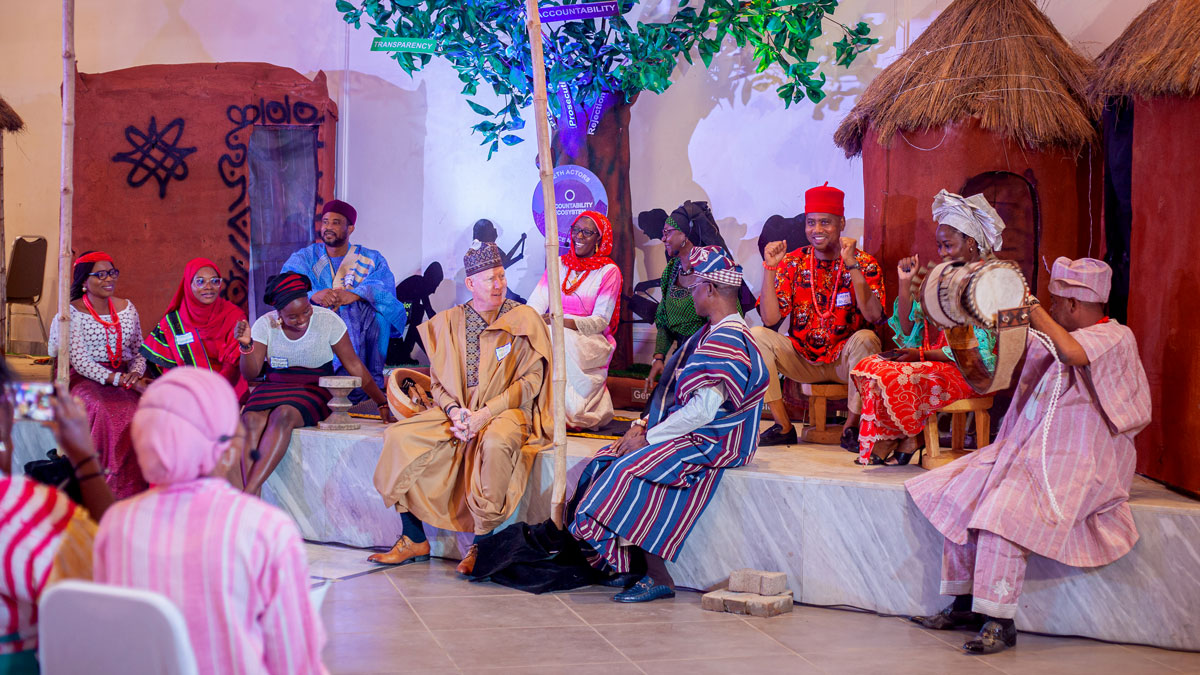
A group of people in traditional attire seated on a platform in a village-like setting with huts and decorative elements.

On Nigeria grantee cohorts acted out their theories of change in a grantee meeting that simulated a village town square. Credit: Pamlens

Additionally, our team was spread across MacArthur’s Abuja and Chicago offices, with each group having slightly different responsibilities. Our Board and Foundation leadership contributed their expertise and connections to sharpen the strategy and deepen the work through regular visits and engagement. We also relied on the counsel of a rotating set of primarily Nigerian external advisors from government, private sector, academia, civil society, media, and faith communities to serve as our “critical friends.”

We were able to localize our strategy, in part, by working with intermediaries or organizations that receive grant funds, then regrant them to other organizations, sometimes offering technical support to recipients. Working this way helped us get funding to organizations and geographies that would not have been possible otherwise.

Relationships and Collaborations Strengthen Place-Based Strategy

We learned that place-based work is most effective when it is relationship-based, takes advantage of local Staff knowledge, and supports local organizations. This builds capacity and connections and leaves strong organizations to continue the work.

Similar to the time-intensive cohort approach, relationship building required Staff time and funding for meetings and travel, which is an important resourcing consideration for future programs.

Place-based work is most effective when it is relationship-based.

Additionally, when selecting topics for place-based programming, we suggest that funders carefully consider both the place and the topic and how leverage points overlap. For example, corruption is transnational and money siphoned from Nigeria is used to buy real estate in other countries. Some On Nigeria grantees worked transnationally, collaborating with global and regional peers.

We excelled at building relationships and trust across groups working at different levels in Nigeria, but we might have done more to foster relationships outside of the country. For example, we think that it would have been advantageous to have incorporated a modest transnational element into the strategy. We would have had to strike the right balance to maintain our Nigerian-led approach, but we wonder what more we might have achieved with a few additional transnational grants to address loopholes that allow illicit financial flows.

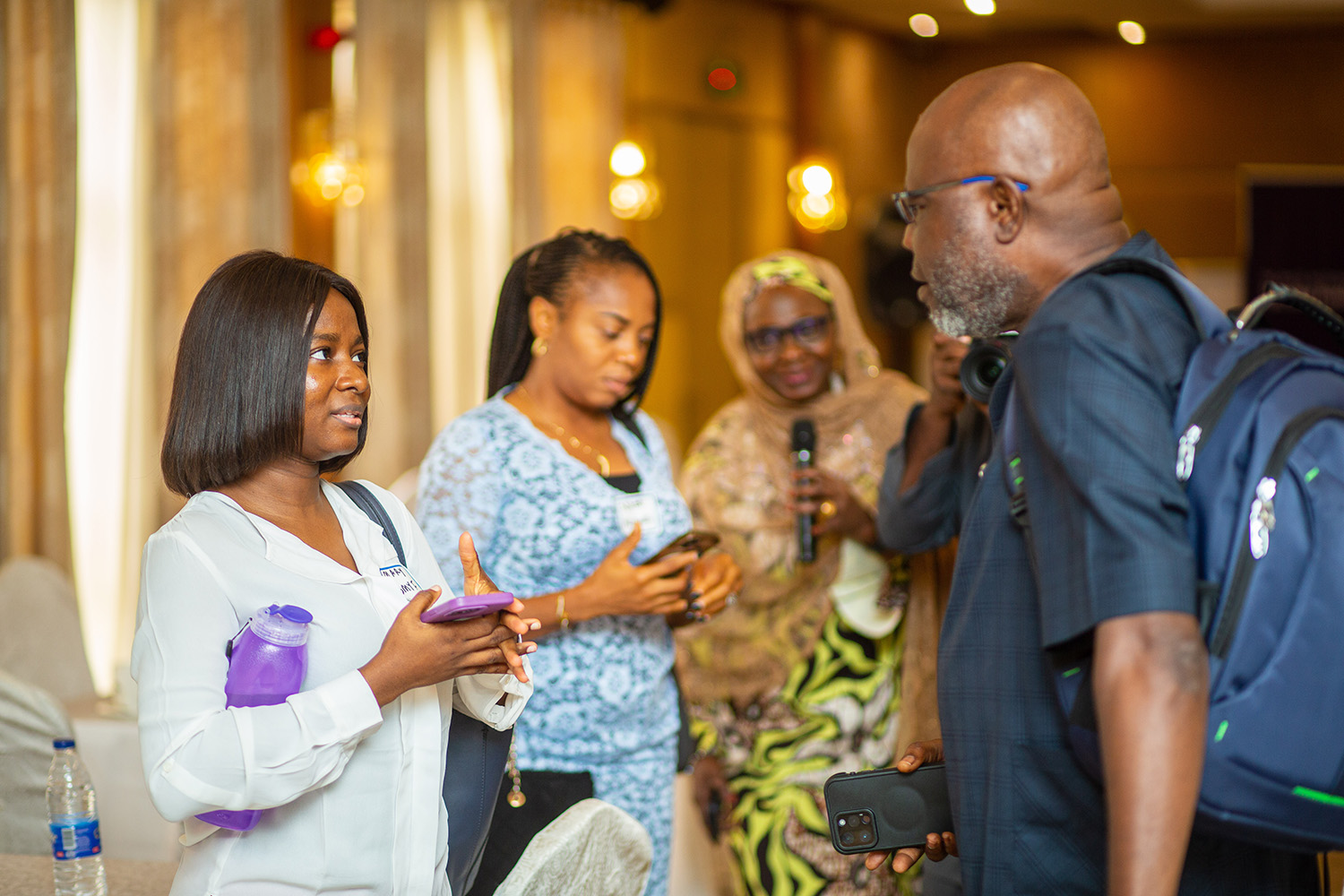
Four people stand indoors having a conversation; one woman holds a water bottle, another man has a backpack.

Grantees network at an On Nigeria communications training in Abuja in 2024. Credit: Pamlens

In addition, the On Nigeria program had rich and robust partnerships with foundation and bi-lateral peers. These collaborations extended our reach, contributed more funding to our issues, gave us a larger voice, and informed our thinking.

Yet, we think that it would have been helpful to seek out new partnerships and collaborations, perhaps looking to the private sector or donors from other regions. We partnered with a familiar set of actors and may have inadvertently left money and influence on the table. If we were to do it again, we would have conducted periodic partnership reviews to try to reach untapped donors. Partnerships can effectively extend reach, contribute more funding, and amplify voice. Interested funders can get involved through the Trust, Accountability, and Inclusion Collaborative.

Gratitude

Our decade of work demonstrated ways of working that can make grantmaking more impactful; the power of locally led, subnational, systemic approaches for making change; the benefits and responsibilities of place-based strategies; and the importance of prioritizing and refreshing partnerships and collaborations over the life of a program. While grounded in Nigeria and accountability and anti-corruption, we believe that these lessons can be adapted and rightsized for different places, sectors, and actors.

There is more to do to strengthen Nigeria’s accountability ecosystem, but the results are worthy of celebration and reflection.

We thank Itad for helping us and grantees understand how the work was unfolding so that we could adapt. We thank our advisors for their time, guidance, expertise, and provocations.

Finally, we thank our 135 steadfast, brave, and creative grantee partners. On Nigeria’s achievements are a testament to their dedication and resilience.