







On Nigeria’s external advisors reflect on the increased accountability, capacity, and collaboration resulting from the anti-corruption work.
Corruption often evolves to bypass new anti-corruption policies and accountability procedures. As a result, our anti-corruption work—central to the On Nigeria Program—needed to be similarly adaptive and collaborative. We co-designed the strategy with grantees, utilized grantmaking strategy-level data to improve effectiveness, and sought advice and feedback from field practitioners over time.
Each year, a cohort of external advisors joined us as On Nigeria’s thought partners and critical friends. They connected us to new people, ideas, and ways of working; advised our team and grantees; taught us new approaches and exposed us to new research; and challenged our thinking. Our work was better because of the input and advice from our many external advisor colleagues over the years: Joe Abah, Hafsat Abiola, Eugenia Abu, Folasade Adefisayo, Jummai Audi, Ibrahim Babagana, Nguyan Feese, John Gaventa, Donald Hopkins, Mahmud Jega, Abubakar Balarabe Mahmoud, Theodora Oby Nwankwo, Ndidi Nwunelli, Ezinwa Nwanyieze Okoroafor, Adebayo Olukoshi, and Mary Victor-Magaji.
We are grateful for their time, expertise, collegiality, and care as we bring the On Nigeria Program to a close and invite you to read reflections from three external advisors below.

John Gaventa
Research Fellow, Institute of Development Studies, and Director, Action for Empowerment and Accountability Research Programme (A4EA)
1981 MacArthur Fellow
For most of my career over the last 50 years, I have been lucky to be on the “receiving” end of philanthropic grantmaking. Serving as an advisor to the MacArthur’s On Nigeria Program over the last seven years has been a wonderful opportunity to advise those on the other “giving” side of the equation. Several lessons stand out:
First, the duration of the commitment. Big problems like corruption and accountability can’t be addressed through short-term commitments. The nearly decade-long Big Bet of MacArthur was a bold and instructive approach.
Second, the program was about more than money. It helped to create learning, capacity, and networking across the multiple and diverse partners, which in turn increased the collective impacts of the work.
Third, I was impressed by the commitment of program Staff to themselves learn and adapt, regularly seeking feedback from grantees, as well as from a diverse set of advisors.
Big problems like corruption and accountability can't be addressed through short-term commitments.
Even long-term programs like this must at some point come to an end, so finally I was struck by the transparency of the Foundation as the program closed—with lots of discussions well in advance with their program partners about how to create sustainability into the future.
Throughout the process, grantees were treated with enormous respect as mutual partners in a joint endeavour rather than simply as “beneficiaries.” Perhaps the most important learning from the program was not only from what the Foundation did, but in how they did it.
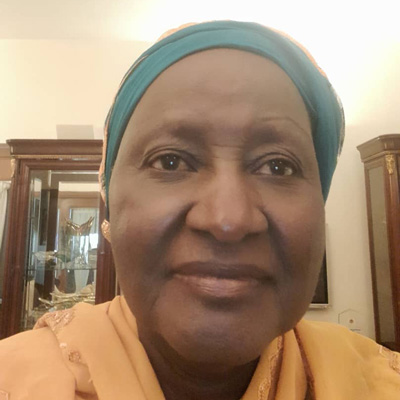
Prof. Jummai Mohammed Audi
Chairman, Nigerian Law Reform Commission
On leave of absence from Ahmadu Bello University, Zaria
During my service as external advisor and law researcher on the team, On Nigeria’s theory of change gave me insight into Nigeria’s challenges, goals, approaches, and outcomes for sustainability in anti-corruption.
Over the two years I served on the team, I actively participated in the programs and events. As a grantor, the Foundation enabled various groups and communities to voice their concerns and hold government officials accountable through programs, policies, and laws for a responsive governance.
On Nigeria’s theory of change gave me insight into Nigeria’s challenges, goals, approaches, and outcomes for sustainability in anti-corruption.
The “Tree of Change” clearly illustrated On Nigeria’s theory of change from the roots to the leaves. The building of capacity for local media organizations on corruption-related journalism and the need to address opportunities, challenges, and threats will continue to be impactful for years to come. The On Nigeria Program also strengthened networks and groups of responsive citizens and government. Finally, I appreciated the opportunity to provide feedback on all learning briefs, and the group’s research results and data will help recommend the way forward.
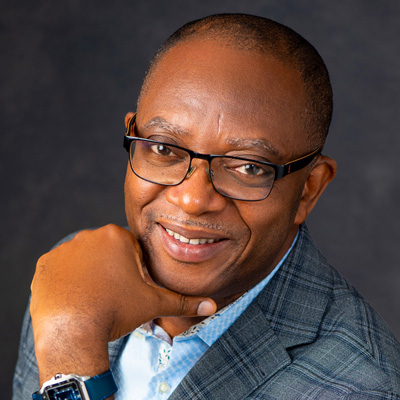
Dr. Joe Abah
Nigeria Country Director, DAI
Having been an informal advisor to the MacArthur Nigeria team for several years, it was a privilege to have been asked to serve as an external advisor in the final year of the On Nigeria Program. This afforded me the opportunity to engage with other external advisors who are leaders in their various fields: from academia and media to social inclusion. It was wonderful how the team of external advisors were collectively able to leverage each other’s areas of expertise for the benefit of the On Nigeria Program. I trust that the program team found the mixture of challenge, guidance, and advice provided by the external advisors to be of benefit.
The team of external advisors were collectively able to leverage each other’s areas of expertise for the benefit of the On Nigeria Program.
The On Nigeria Program tackled some of the more difficult issues facing Nigeria. The courage to have taken on challenging issues such as corruption has been rewarded by the appreciable impact that the On Nigeria Program has made in building accountability platforms, supporting investigative journalism, and pioneering the use of behavioural insights in tackling societal ills. The program team and the Foundation’s grantees have a lot to be proud of and deserve our commendation.
I have learned a lot and met some wonderful people in my time as an External Advisor. I hope to continue to be involved in the Foundation’s work in whatever capacity there may be an opportunity for me to do so. I am grateful for the privilege to have served.