
Bria Gillum, Senior Program Officer, reflects with pride and gratitude on MacArthur’s Criminal Justice Big Bet—known as the Safety and Justice Challenge—as participating cities and counties wrap up their work under our grants.
Beth Huebner has spent the better part of her career working to improve the criminal justice system in St. Louis County, MO. As a local expert on the topic, she is all too familiar with the challenges faced by local criminal justice systems: a jail crowded with people held for non-violent offenses or their inability to afford bail, too few ways to connect people with treatment for mental illness or substance use, and difficulties bringing together all the relevant government leaders and departments to make the system more effective, efficient, and fair.
These problems are not unique to St. Louis County, which is why hundreds of cities and counties welcomed the opportunity to join MacArthur’s Safety and Justice Challenge (SJC) when it launched in 2015. This ten-year Criminal Justice Big Bet would provide communities with grant funding to bring local leaders and community members together to assess their criminal justice system and develop and implement plans to improve public safety.
A decade later, grant recipient—including Huebner and the St. Louis County team, and communities from Charleston County, SC to Los Angeles, CA—are wrapping up their MacArthur-funded work, and there is much to be proud of. While there are too many accomplishments of the Safety and Justice Challenge to mention, we want to highlight a few examples that capture the many ways the SJC advanced lasting change and impacted national criminal justice reform.
Bringing Together More Voices and Perspectives
One of the SJC’s most crucial achievements is bringing a wide variety of individuals, government agencies, and community organizations together to shape reform efforts.
In the past, criminal justice reforms largely were shaped by people who worked in the justice system. But the criminal justice system touches many people—from victims of crime to individuals who have spent time in jail to people concerned with community safety. Only by including all these voices can we create a better criminal justice system.

From left to right, Lux Thunberg, Antonio Espinosa, Jennifer Marx Burke, Ann Deiman-Thornton, and Jessica Espinosa of Art From The Inside. Art From The Inside, which centers the visual voices of incarcerated artists, served as a community partner for Inside & Out: The Humanities and Mass Incarceration, a convening hosted by MacArthur grantee Illinois Humanities. Credit: Illinois Humanities
Cities and counties participating in the SJC embraced this approach and succeeded in broadening the circle to include more perspectives. SJC communities have brought together elected leaders, law enforcement, judges, public defenders, victims of crime, people who have spent time in jail, community members, as well as both liberal and conservative organizations that support reform. Some of these groups have not had a seat at the table before and have provided much-needed input to improve local justice systems.

“No single agency or organization can solve the criminal justice system’s complex challenges alone.”
In Charleston County, SC, the Criminal Justice Coordinating Council was key to bringing viewpoints together. Using data to guide decisions, the group worked to reduce unnecessary local jail use, increased diversion of individuals away from the criminal justice system to services that address root causes of incarceration, and found ways to increase fairness and efficiency.
“Recognizing that no single agency or organization can solve the criminal justice system’s complex challenges alone, the Charleston County Criminal Justice Coordinating Council emphasizes collaboration, information sharing, and joint system-wide problem solving,” the group said.
Breaking Cycles of Jail Incarceration
Jails too often become warehouses for people who are living in poverty, lack housing, or suffer from mental illness or addiction. Some people cycle in and out of jail in large part due to these challenges. Communities participating in the SJC focused heavily on interrupting this cycle.
Through the adoption of local criminal justice coordinating councils and local jail population review teams, leaders looked for individuals trapped in these cycles, considered whether they pose a risk to the community, and looked for more appropriate ways to address their situations. In some cases, jail remained the right place for individuals, but often, both they and the community were better served by transitioning individuals to a program that provided resources to minimize contact with the justice system. This effort has driven growth in alternatives to jail, including diversion programs and deflection programs, where individuals can receive behavioral health care or other forms of support.
This effort has driven growth in alternatives to jail, including diversion programs and deflection programs...
In Los Angeles County, the SJC helped launch the Rapid Diversion Program in 2019. Since then, the program has expanded significantly, diverting more than 3,400 individuals from jail to mental health treatment and leading to the dismissal of more than 1,200 cases. The program has also demonstrated strong long-term outcomes: 91 percent of participants who completed the program have not had a new criminal case filed against them, underscoring the program’s effectiveness in breaking cycles of incarceration.
As we worked with SJC communities, MacArthur also saw an opportunity to help break the link between homelessness and jail incarceration. In 2022, we launched the Just Home Project in partnership with the Urban Institute to support communities as they developed solutions to housing. MacArthur also provided the communities with an opportunity to tap into an impact investment to fund related housing development projects.
Creating an Enduring Community
We are proud that, over the last ten years, the SJC evolved from a criminal justice initiative into a vibrant and enduring community. Through regular convenings and ongoing opportunities to connect virtually, hundreds of leaders, practitioners, and advocates across more than 100 cities and counties have built trusted relationships grounded in a shared commitment to advancing safer, more equitable local justice systems. The strength of the SJC community lies in its members’ willingness to learn from one another—openly sharing challenges, successes, and expertise to accelerate progress and drive lasting change together.

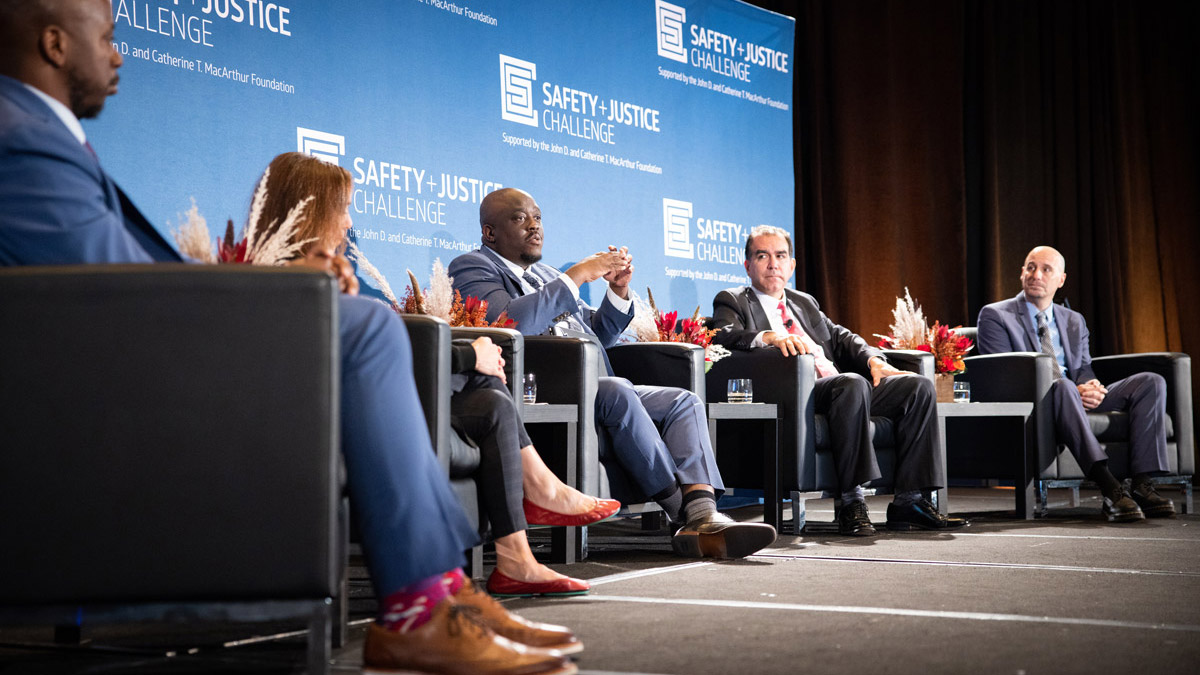
Panelists discuss the challenges and opportunities of criminal justice reform at a SJC convening in Atlanta, GA. September 2022.
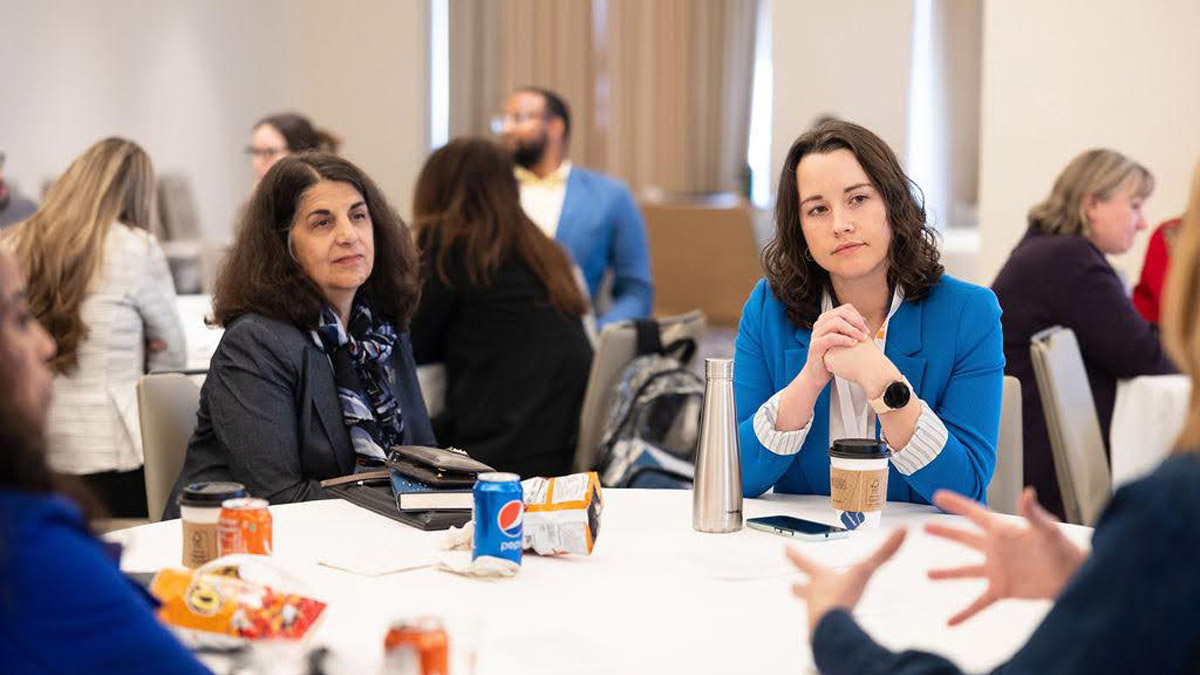
Participants at a SJC gathering in St. Louis, MO. May 2023.
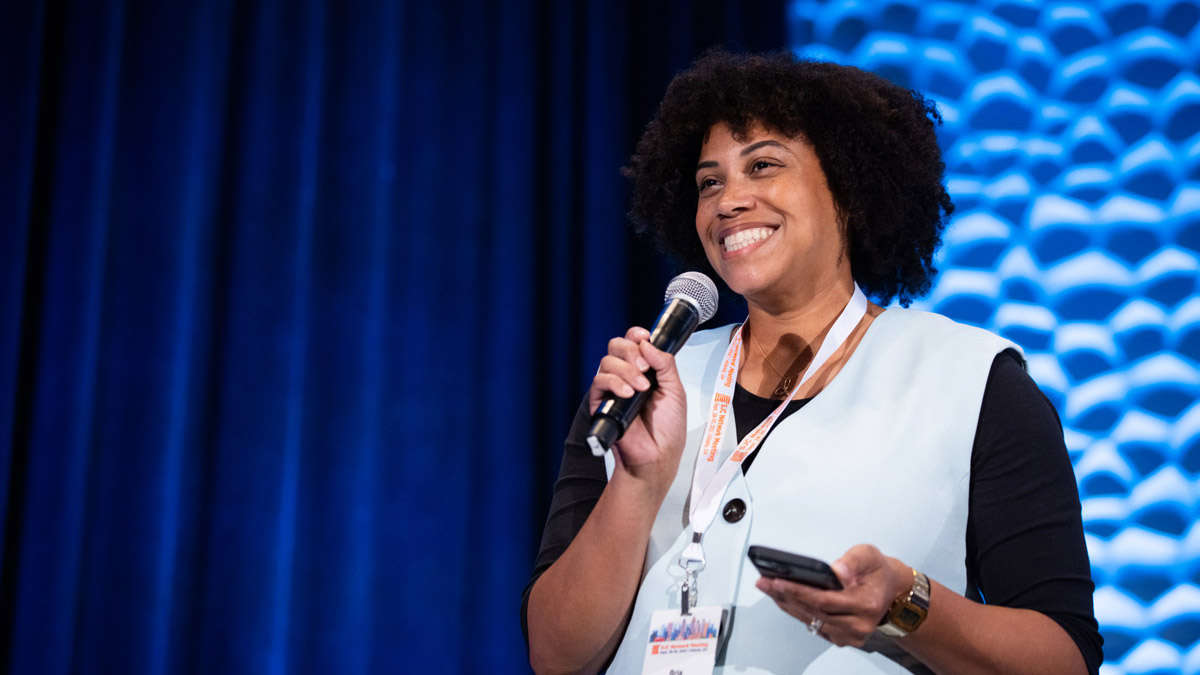
MacArthur Senior Program Officer Bria Gillum speaks to SJC participants at a gathering. September 2022.
As the SJC grew and participants made progress, a variety of cohort groups emerged. These allowed SJC communities in the same state or region or with specific shared goals to gather in smaller groups to explore topics more deeply and learn from each other. The SJC eventually grew to nearly a dozen cohorts, including ones focused on issues related to racial and ethnic equity, mental health, as well as among Native Americans.
“This project has been one of the most meaningful chapters of my career, not just for what we accomplished, but for the people I had the privilege to work alongside,” said Beth Huebner. “Together, we built, failed, pushed, and improved. And while there is still so much work ahead, I’m proud of what we leave behind.”
MacArthur is working with an evaluation and learning partner on a full assessment of our Criminal Justice program’s Safety and Justice Challenge. We plan to share the findings in early 2027.