






Chicago news organizations Illinois Answers, Injustice Watch, and Investigative Project on Race & Equity create a collaborative environment that expands capacity, reaches more people, and sparks change.
As federal immigration agents descended on the Chicago area in the fall of 2025, journalists from nine local, nonprofit newsrooms sprang into action.
Fanning out across the city, they conducted interviews, operated a tip line, and reviewed videos and other material on dozens of uses of tear gas and pepper spray.
The result was a sweeping investigative project that, among other concerns, reported that in two-thirds of those instances, chemical irritants were deployed against peaceful protestors and that agents continued using the irritants even after a federal judge barred them from doing so.
Nearly impossible for a single newsroom to handle comprehensively, the project exemplifies an extensive and growing effort in Chicago by nonprofit newsrooms to collaborate and produce ground-breaking investigations into issues that impact communities. Investigations have covered criminal justice, housing, public health, race, and education, among other topics.

“It used to be that reporters were fiercely protective of their information, their ideas, and their stories. You wanted to be first and get the scoop.”
Three nonprofit investigative journalism outlets—Investigative Project on Race & Equity (IPRE), Injustice Watch, and the Better Government Association’s (BGA) Illinois Answers Project—have been particularly active working with nonprofit and mainstream commercial newsrooms. Sharing resources expands newsrooms’ capacities, allows them to reach more communities, and sparks crucial changes.
“It used to be that reporters were fiercely protective of their information, their ideas, and their stories,” said Angela Caputo, Co-Founder and Executive Director of IPRE, a partner on the immigration enforcement story. “You wanted to be first and get the scoop.”
But when journalists who had worked at some of the city’s first nonprofit newsrooms founded IPRE in 2023, “we really thought about not competing with what’s already there,” Caputo added. Instead, IPRE’s founders considered how they could best serve the local Journalism community.
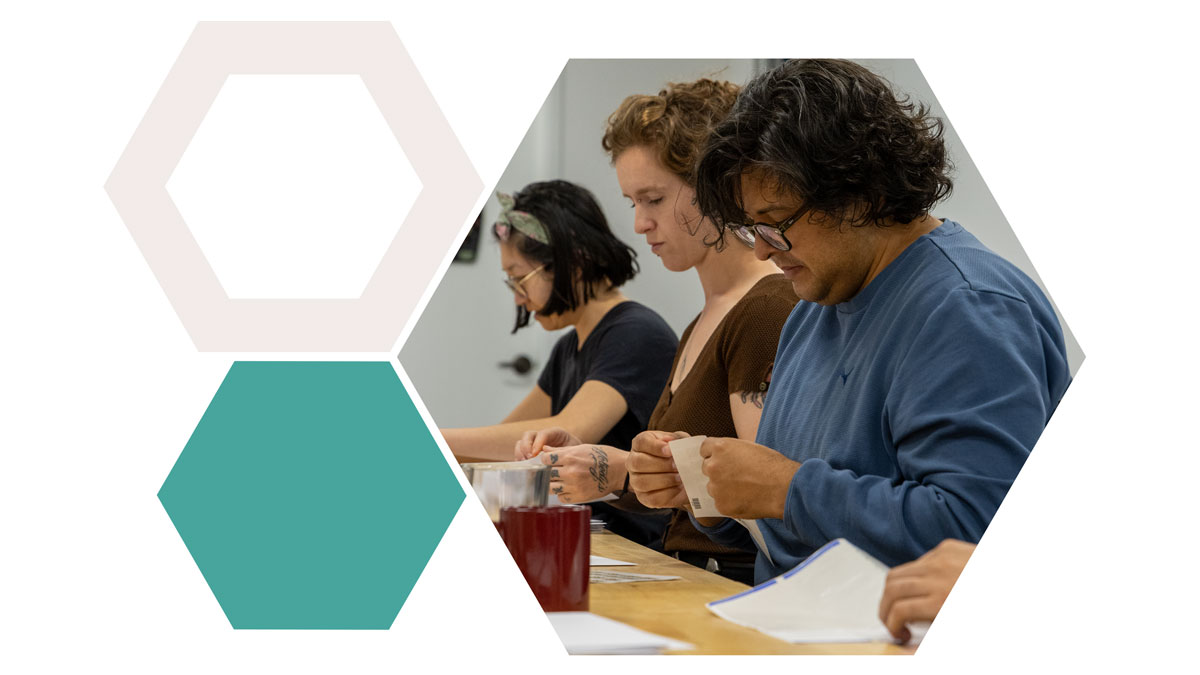
IPRE’s Emeline Posner, center, and Injustice Watch reporter Carlos Ballesteros, right, were among teams from both newsrooms that mailed 4,000 letters with resources from their tax foreclosure investigation story to people at risk of losing their homes. Credit: Maggie Sivit.
Collaborative From the Ground Up
A recent collaboration between IPRE and Injustice Watch is an ongoing series about Cook County homeowners losing possession of their homes due to unpaid property taxes that in some cases amounted to less than $200, disproportionately affecting Black homeowners. The initial story helped spark proposed state legislation. More installments, including a piece that explores solutions, are scheduled.
“We get true transparency, true accountability and better journalism and, therefore, better serve our audiences.”
Injustice Watch reporters work directly with counterparts at IPRE and editors in both newsrooms share responsibilities, Injustice Watch Managing Editor Jonah Newman said. “The whole thing is collaborative from the ground up,” he said.
In 2020, Injustice Watch collaborated with the BGA’s newsroom and other newsrooms to produce The Circuit, a data-driven analysis of the workings of the Cook County Circuit Court that was based on 30 years of records. The project revealed several insights, including the lenient sentence given to the Chicago Police officer convicted of the 2014 murder of Laquan McDonald, millions of taxpayer dollars lost to drug arrests that are tossed out of court, and the harm inflicted by Illinois’ HIV criminal transmission law—a measure critics say is outdated and unfairly punishes people merely for living with an incurable virus.
Collaboration “is integral to our mission and steeped in our DNA,” Illinois Answers Project Editor in Chief Ruby Bailey said, adding that Illinois Answers often works on statewide issues with newsrooms throughout Illinois. “We get true transparency, true accountability and better journalism and, therefore, better serve our audiences.”
“We realize that reporting resources are finite and precious.”
For example, Illinois Answers and public media, TV stations, and news services around the state have reported on the abusive use of restraint chairs in jails. The project also partnered with The New York Times on a story about “crime-free housing” laws that lead to evictions. In 2021, the year before BGA created Illinois Answers, the association collaborated with the Chicago Tribune on a Pulitzer Prize-winning investigation of regulatory failures leading to deadly fires in the city. That project created momentum for policy changes, as did Illinois Answers’ 2024 collaboration with the Tribune on faulty property tax assessments.
Having reporters who can take months to dive deep into an issue and work through sometimes lengthy disputes over releasing records is an important strength that Illinois Answers brings to investigative collaborations, Bailey said.
“We realize that reporting resources are finite and precious,” she added.
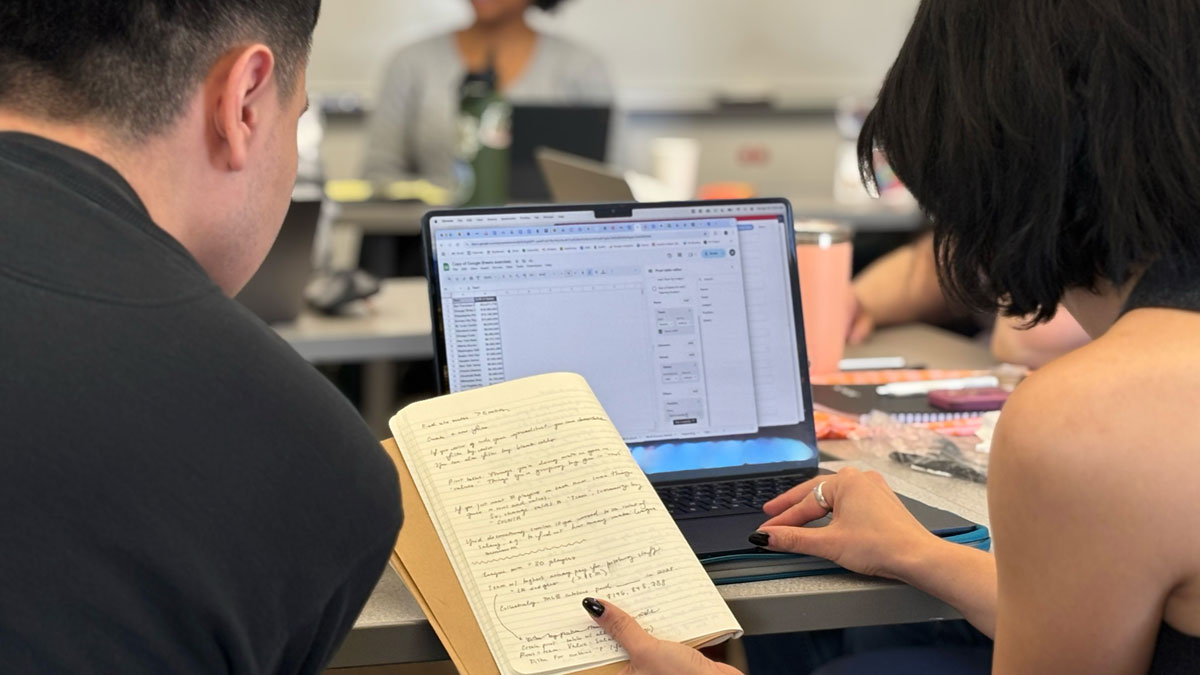
Journalsts receive data training provided by the Investigative Project on Race & Equity (IPRE). Credit: IPRE
Chicago’s Unique Collaborations
Collaborations can take many forms: sharing reporting and editing and other resources is common, as is allowing one outlet to publish the work of many partners. Illinois Answers has played an important role in helping IPRE with long-term strategies and fundraising. Also, IPRE shares offices with Injustice Watch, allowing for organic idea-sharing on business plans, engagement strategies, story angles, and other topics.
While collaboration and nonprofit media models are increasingly common nationwide, Chicago’s version is unique and especially conducive to working together.
“It’s a small ecosystem in Chicago,” said Newman of Injustice Watch. “Reporters are already friends, and they’ll say, ‘Hey maybe we should partner on this.’ If two reporters find out they’re working on essentially the same story, instead of saying, ‘We have to work faster to beat them,’ we’ll work together.”
“There’s just an openness that didn’t exist in the same way ten years ago in Chicago journalism.”
That is what happened with Injustice Watch’s groundbreaking investigation of a technology firm responsible for major cost overruns into the millions, and missed deadlines under state and county contracts. Injustice Watch reporter David Jackson had begun working on the investigation and realized that reporters at his former employer, Chicago Tribune, also were working on the story. The teams decided to collaborate.
“There’s just an openness that didn’t exist in the same way ten years ago in Chicago journalism,” Newman said. “It’s built over time as a function of the proliferation of nonprofit newsrooms really eager to work together and make our work more impactful, and just a realization that competition doesn’t necessarily serve us that well.”
Beyond collaborating on projects, strategies, fundraising, and sharing office space, Injustice Watch, Illinois Answers Project, and IPRE are instilling the collaborative ethos in the next generation of journalists through fellowships and internships with a heavy focus on mentoring.
“Chicago’s got a really special spirit,” IPRE’s Caputo said. “We’re doing this in the interest of the public. We’re a very civic-minded journalism community.”
Between 1979 and 2025, MacArthur has provided the Better Government Association with $2.95 million in support, including $350,000 for the Illinois Answers Project in 2025. The Foundation also supported Injustice Watch with $705,000 between 2020 and 2025 for general operations and data training workshops. And MacArthur provided the Investigative Project on Race and Equity with $350,000 for general operations in 2025.