





 Location
 Age
Age Area of Focus
 Website(s)
 Social
About Song's Work
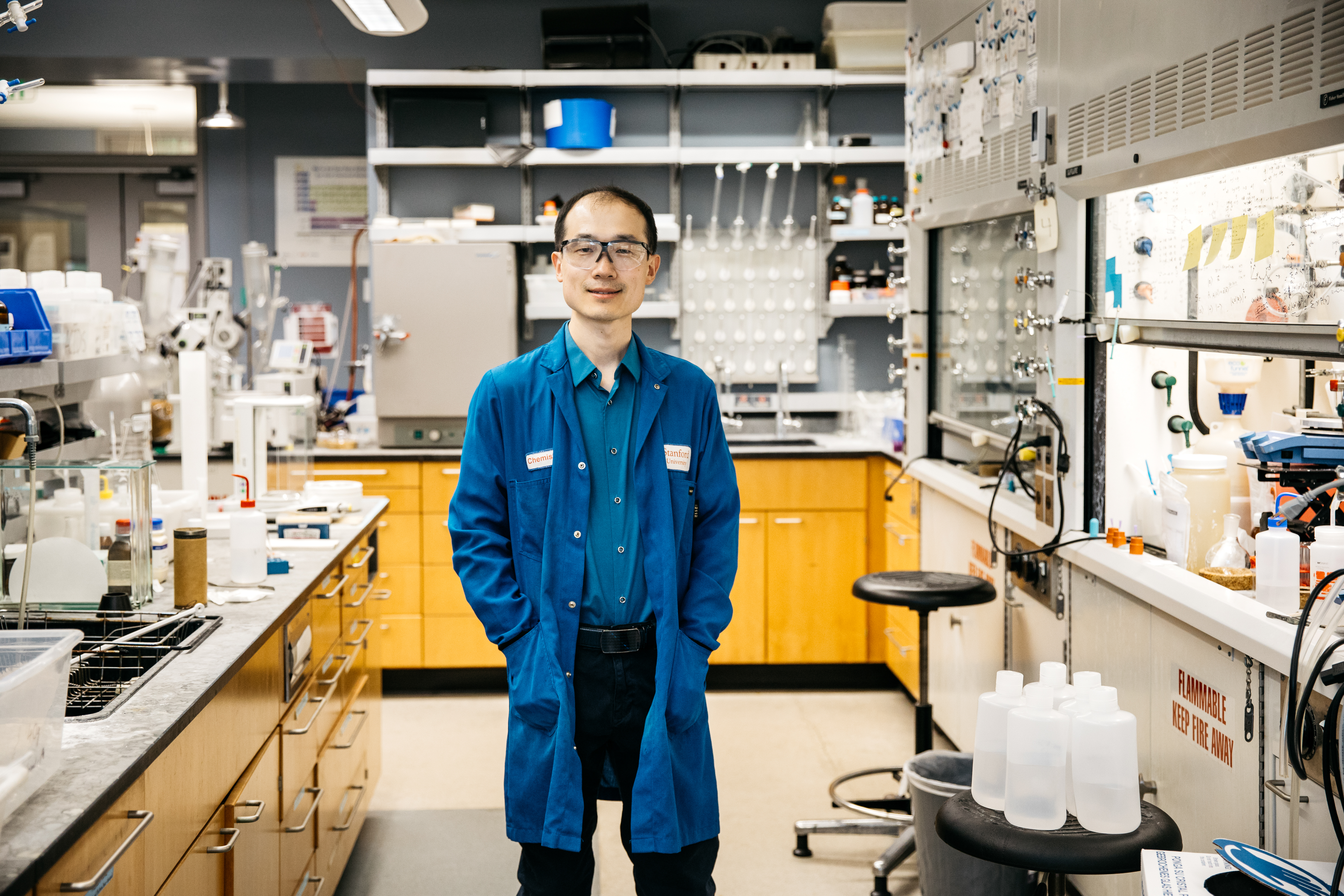
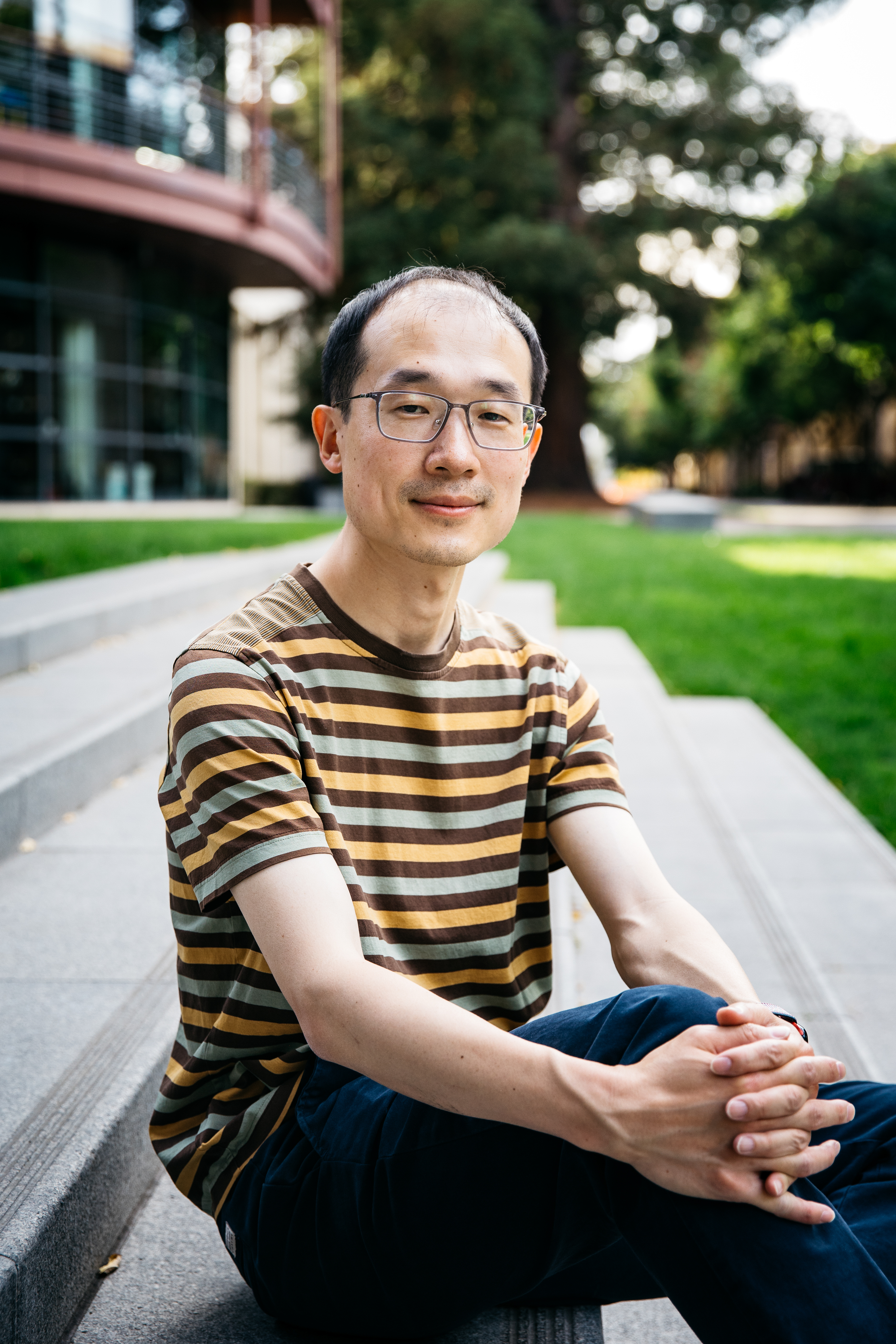
Song Lin is an organic chemist designing electrochemical methods to more efficiently and sustainably construct complex organic molecules. Lin develops electricity-based processes that improve on chemically driven reactions to form molecules with essential uses in pharmaceuticals and in materials like polymers. In addition to his experimental work, he details the reactions’ underlying mechanisms, laying the groundwork for future discoveries.
Electrochemistry uses electricity to induce chemical reactions, rather than resource-intensive and often toxic chemical reagents. In addition to being more sustainable and safer, electrochemistry offers the potential for added control over reactions and their output. In early work, Lin developed an electrochemical method for transforming alkenes (molecules with at least one carbon-to-carbon double bond) into vicinal diamines (two carbon atoms bonded with two amino groups), a structure that appears in many pharmaceuticals and biologically active molecules. Adding new chemical groups to an alkene to change its properties (that is, functionalization) often requires expensive and rare heavy metals and produces toxic waste. In contrast, Lin’s low-cost and streamlined process uses the abundant element manganese as a catalyst and electrical current from two AA batteries. Lin has also used electrochemistry for asymmetric synthesis of chiral molecules, which are often used in medicinal chemistry. Chiral molecules have different structures that are mirror images of each other but not identical, like left and right hands. Traditional chemical reactions produce both “hands” (enantiomers) of a chiral molecule, although there are many instances in which only one “hand” is needed. Lin and collaborators induced production of only the needed chiral product (what is known as enantioselectivity) by combining two different reactions within one electrochemical reaction system (in this case, cobalt-catalyzed hydrogen-atom transfer and copper-catalyzed radical cyanation). More recently, Lin tackled a long-standing problem in organic synthesis: selectively modifying a specific carbon-hydrogen (C-H) bond on a molecule with several such bonds. He and collaborators devised a way to leverage radical molecules, which have unpaired electrons and are highly reactive. They modified pairs of these molecules, adding structural bulk that kept them too far apart to react with each other (sterically encumbered) but close enough to act cooperatively and maintain their reactivity. These “frustrated” radical pairs can then be electrochemically activated and directed to specific C-H bonds.
Lin has also created new reaction tools to increase efficiency and broaden access to electrochemistry, such as wireless photoelectronic devices that use light to drive electrochemical reactions. These devices can support hundreds of reactions at the same time for high-throughput experimentation. Lin is opening new pathways for safer, more environmentally friendly, and highly selective synthetic organic reactions.