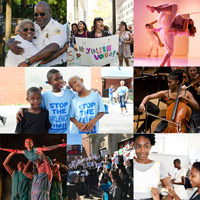
Three arts organizations—Arts of Life, Chicago Children's Theatre Red Kite Project, and 3Arts—help people with disabilities foster creativity and develop their artistic practices and careers.
On an industrial street in Chicago’s West Town, the Arts of Life studio is brimming with color, creativity, and commotion.
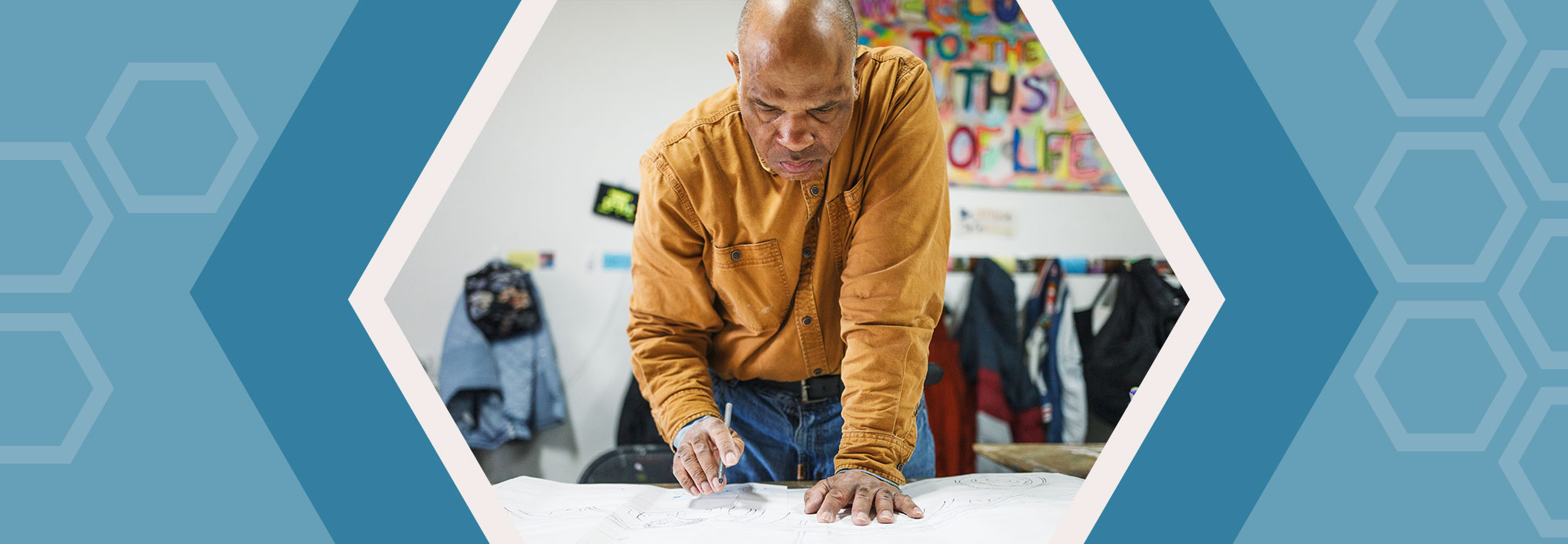
Bill Lilly is meticulously drawing three-dimensional dice. Susan Pasowicz holds pencils in both hands to create gyroscopic sketches. Marcus Imani Kennedy is producing stained-glass-like mosaics inspired by the music flowing through his headphones. Creations by these and other artists cover the walls, ceiling, and tables. The creators flit between each other’s work to share feedback and ideas.
Lilly, Pasowicz, and Kennedy have intellectual or developmental disabilities. Arts of Life is their studio and workplace. It is also a place that meets requirements for receiving Medicaid benefit—Illinois’ first and only state-licensed Community Day Service provider focused on artistic vocations.
Over its existence, Arts of Life has supported 170 creatives.
Arts of Life is one of several forward-looking local arts organizations, including Chicago Children’s Theatre Red Kite Project and 3Arts, working in the disabilities space. Utilizing dynamic approaches such as theater and visual arts, the organizations enhance and promote the creative work of people with developmental and intellectual disabilities and the Deaf community.
Arts of Life artists also receive modest stipends and a percentage of art sales and licensing fees. And the organization helps artists exhibit and market their work. Other trained arts professionals work side by side with them.
“We work hard to make sure our artists don’t feel like our staff are above them,” Arts of Life Executive Director Denise Fisher said. “They work together to problem solve just like any artist would in an artist collective setting.”
Fisher founded Arts of Life in 2000, with Veronica “Ronnie” Cuculich, a resident in the program Fisher directed at the time. Both started gauging interest in the concept of an artists’ collective for people with developmental and intellectual disabilities. The artist roster started with ten. Now it totals 84. Over its existence, Arts of Life has supported 170 creatives.
Along with the West Town location, the organization has studios in suburban Glenview and in the First Presbyterian Church of Chicago in the Woodlawn neighborhood on the South Side. The Woodlawn site is the home base of Marvin Young, an artist who has recently gained local acclaim.
Young’s large-scale, colorful, and intricate drawings of Chicago street scenes, fire trucks, school buses, taxicabs, and people were recently exhibited in a solo show at the Intuit Art Museum. His work also has been featured at EXPO Chicago.
“I started drawing when I was a kid back in the ’60s and ’70s,” Young said in an Arts of Life video. He recalls childhood trips with his mother and sisters to see fire trucks at a station on the South Side. “I learned it by myself. That’s my hobby. It’s what I like.”
When he joined Arts of Life, Young reached a wider audience. Along with helping pitch creators’ work to outside galleries and buyers, Arts of Life hosts six curated exhibitions a year, holds an art auction, and helps artists make and market prints, cards, or other products.
“Some are career artists who really want to sell their work,” Arts of Life Director of Development & Communications Anne Cauley said. “Some just want to make art and don’t care about it being seen.”
Acting with Autism
Chicago Children’s Theatre Artistic Director Jacqueline Russell and her colleagues are utilizing a renovated former police station on the Near West Side as theater space—part of which is devoted to helping young people on the autism spectrum expand their creativity and emotional growth.

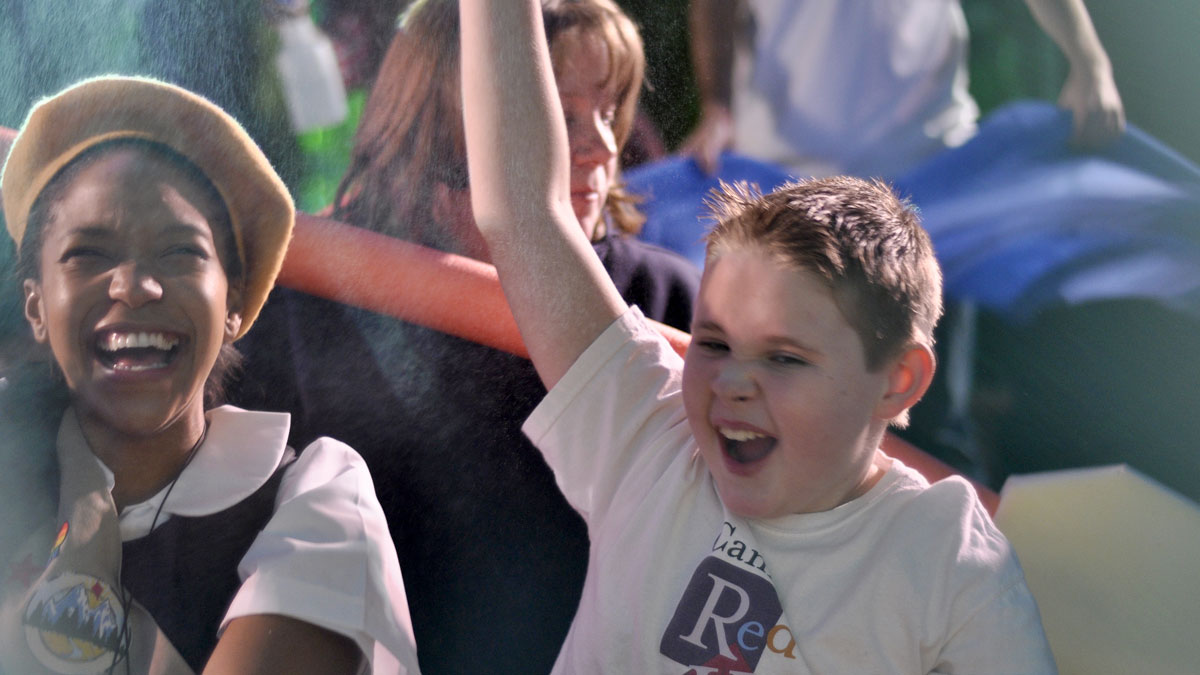
Red Kite Project brings together young people with autism for summer camps that culminate in an interactive performance the young actors develop. Credit: Michael Courier for Chicago Children's Theatre
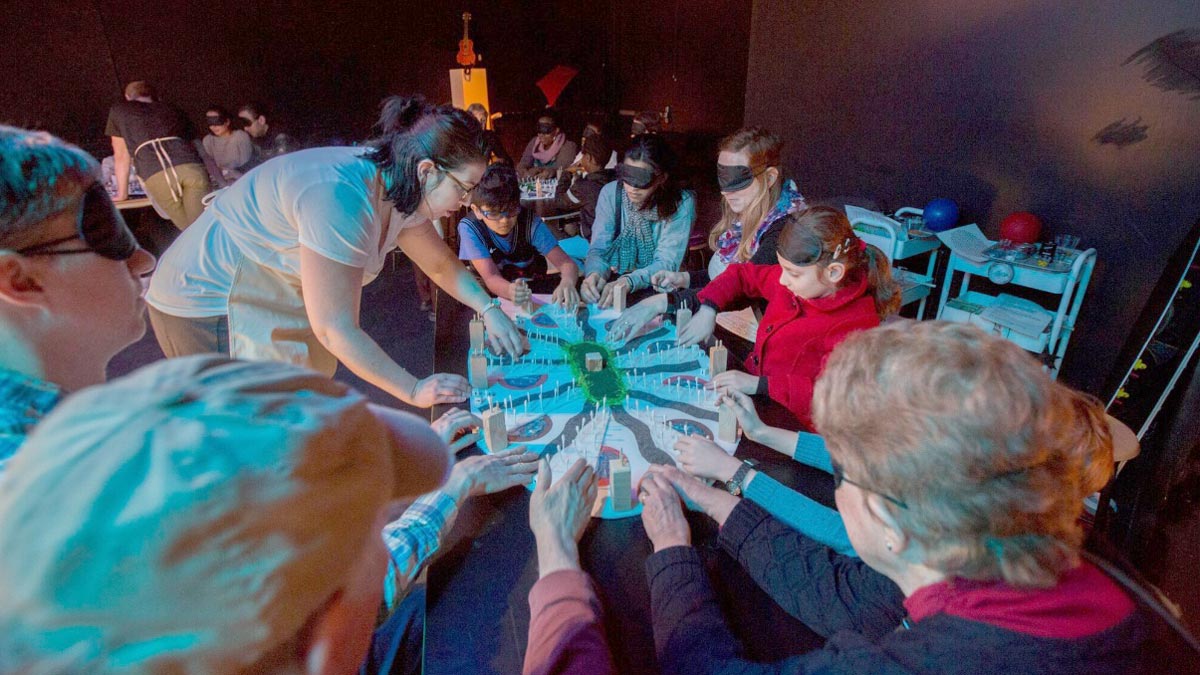
One of Chicago Children’s Theatre’s programs for people with disabilities, X-Marks the Spot is a serialized audio play that encourages listeners to engage with all five of their senses. Credit: Chuck Osgood for Chicago Children's Theatre
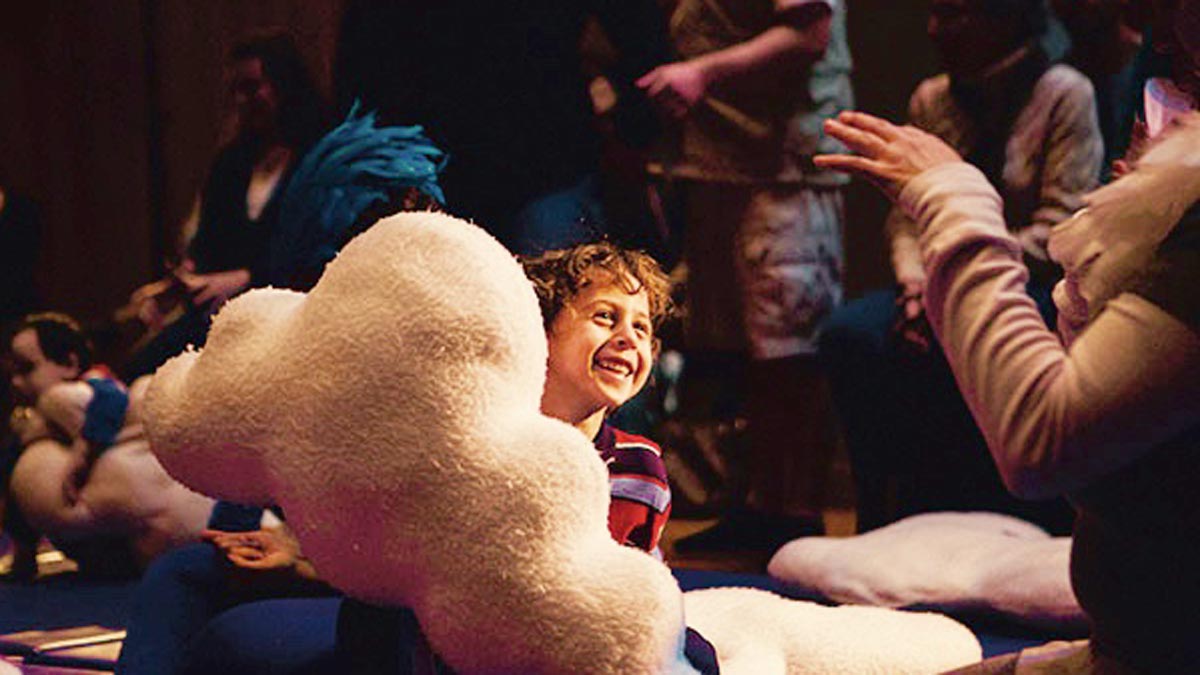
Chicago Children’s Theatre has created safe, inviting spaces in several original Red Kite productions with performers trained to respond to each child and their specific sensitivities. Credit: Joe Mazza, Brave Lux inc. for Chicago Children's Theatre
Known as the Red Kite Project, the initiative brings together young people with autism between the ages of 8 and 22 for summer camps that culminate in an interactive performance the young actors develop. Chicago Children’s Theatre also produces theatrical experiences specifically for audiences of children with disabilities and autism.
“The first couple of days it was like walking into a cold pool,” said Jason Ruiz, who registered his son Valentino for Red Kite in fourth grade. “By the end of the first week, this amazing transition happens. They go from being nervous and scared to actually forming friendships and bonds and relationships.”
Ruiz fondly remembers his son’s excitement over picking songs for the camp’s daily dance party, or sensory games. A Red Kite camper for more than a decade, Valentino, 23, his family and Russell are exploring how he can stay involved as a mentor or counselor.
“A lot of times, as special needs parents, we place our kids in boxes,” Ruiz said. “We do everything we can to protect them. Red Kite does a really good job showing us that our kids can do a lot more than we can always see; of breaking us out of that box.”
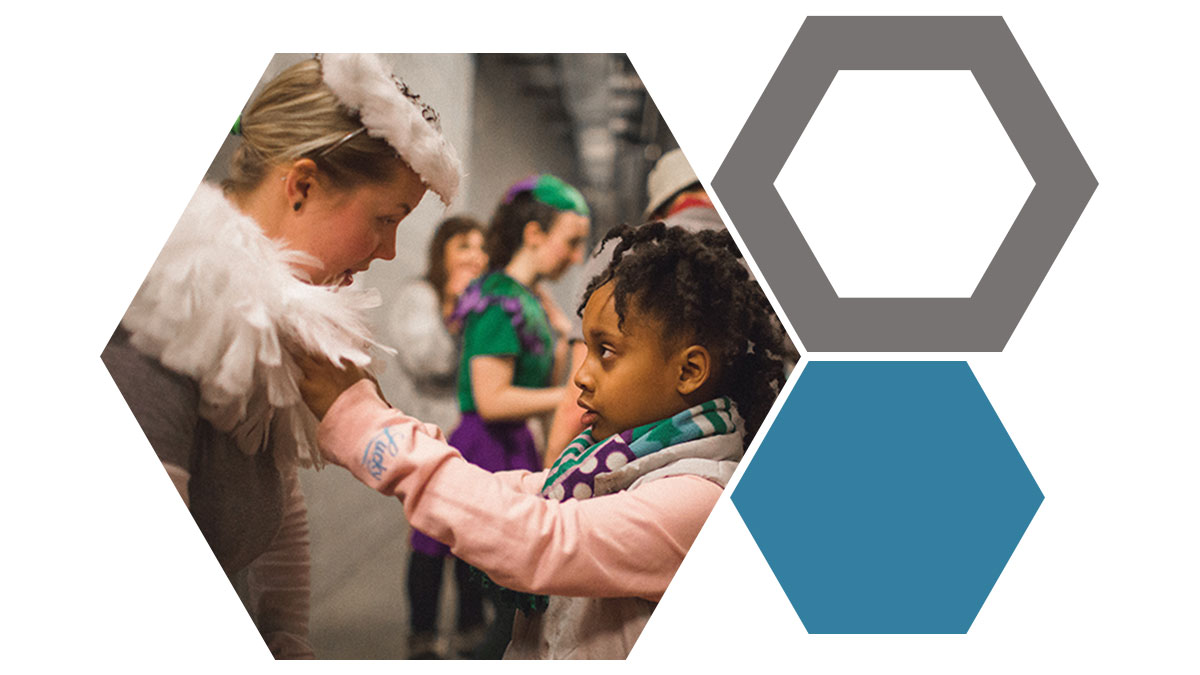
Red Kite Productions encourage audience members to move, laugh, talk, sing and interact with specially trained teaching artists. Credit: Joe Mazza, Brave Lux inc. for Chicago Children's Theatre
The origin of the Red Kite Project traces back to the mid-1990s.
Russell was placing teaching artists in public schools when an elementary teacher pleaded for an artist to instruct students in her class who were on the autism spectrum. Since no artists on Russell’s roster were available, she herself leaned into the opportunity—drawing on her experience teaching a children’s music class and collaborating with David Kersnar, a Lookingglass Theatre Company member. Kersnar had worked with kids with disabilities and conditions that included autism.
Russell developed exercises that allowed students to navigate their sensitivities and grow emotionally and creatively.

“Red Kite does a really good job showing us that our kids can do a lot more than we can always see; of breaking us out of that box.”
An invitation to work with Oily Cart, which creates sensory theater shows for young people with disabilities in the United Kingdom, inspired Russell to bring Oily Cart to Chicago in 2007. The Red Kite Project was launched in 2008 with “Red Kite Blue Moon,” a play designed specifically for kids on the autism spectrum.
“Everyone can see the performance, but [kids with autism] particularly are going to feel very welcome in this setting,” said Russell. “I love those moments where art and autism really meet…[creating] these beautiful little jewels for people with autism and for their caregivers.”
Building Bodies of Work
Artist residencies are often inaccessible for people unable to leave their home or who need to be close to caregivers.
Since 2014, nearly 40 such artists have worked in the 3Arts/Bodies of Work Residency Program, a partnership between 3Arts, the University of Illinois-Chicago, School of the Art Institute of Chicago, and the disability rights group, Access Living, a disability rights group. The residencies for Deaf and disabled artists in the Chicago area create crucial and elusive “time and space for artists to discover and lean in and stretch, to execute their visions,” 3Arts Executive Director Cat Tager said.
Fellows in the three-month residency get monthly stipends, accessibility resources, and opportunities such as teaching master classes, leading critiques, or working with faculty and students at the educational institutions.
“I definitely feel like this residency gave me a lot of permission that I didn’t feel like I had been able to give myself...”
Each “bespoke residency” is tailored specifically to the artist’s goals and needs. They work with an advisor to figure out how to shape the experience, Tager said.
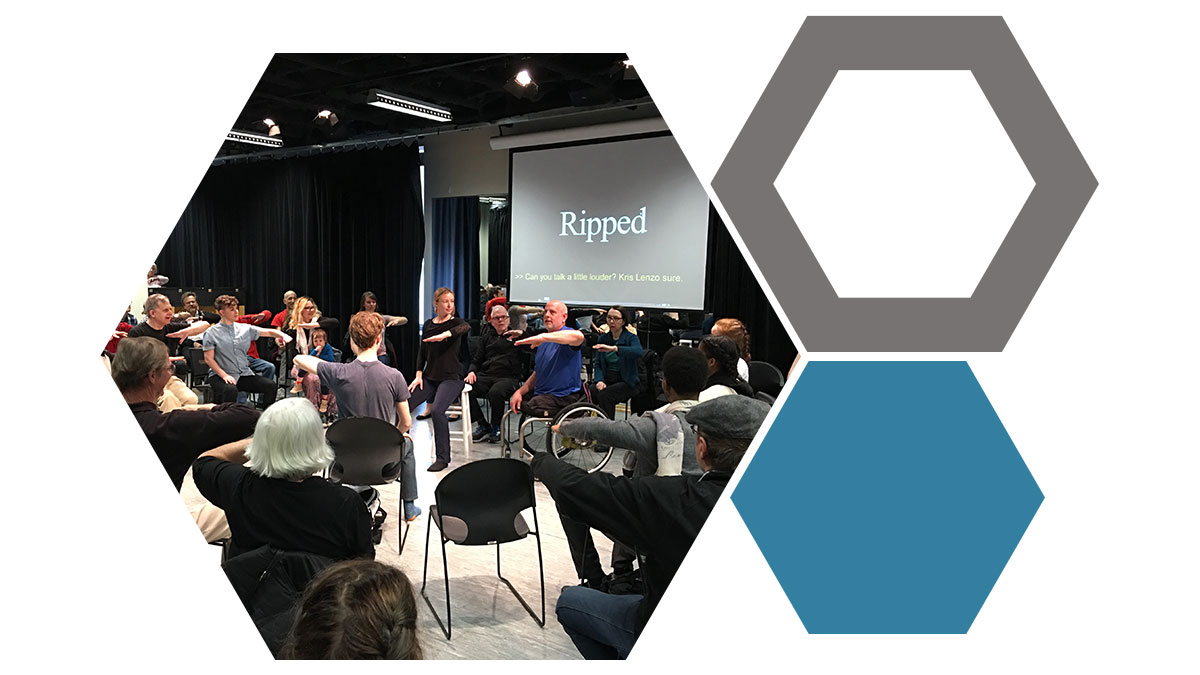
3Arts Bodies of Work Fellow Kris Lenzo, leading a movement class in 2017, is the subject of the documentary, “Ripped,” about his life as an athlete and dancer. Credit: Alison Kopit
3Arts residents’ work is as diverse as their life experiences.
Genevieve Ramos, an award-winning Mexican-American Chicago native, started painting after a life-changing car accident. Rachel Singer uses theater and dance to explore her work in occupational therapy and living with disabilities that are not outwardly visible. Terri Lynne Hudson creates accessible multi-disciplinary pieces that involve video, dance, and theater. Her artwork draws on her journey with chronic illness and her identity as a queer disability rights activist.
“I definitely feel like this residency gave me a lot of permission that I didn’t feel like I had been able to give myself or get from other institutions in the past,” Hudson recalled in a recent interview in the Disability Culture Leadership Initiative video series. That freedom inspired her to create whatever art she wanted and to work in media that was unfamiliar to her, Hudson said.
“I really got this feeling of, ‘Why not? Why can’t I? I don’t feel like I’m hearing that I can’t or that I shouldn’t. So, I’m going to, and here it is.’”
In 2024, MacArthur provided $240,000 in support to Arts of Life for general operations and $240,000 to the Chicago Children’s Theatre for general operations, including the Red Kite Project. Between 2005 and 2024, Red Kite received $110,000 in grants directly from MacArthur.
Since 1987, MacArthur has provided more than $1.26 million to 3Arts for general operations, assistance to individual artists, technical assistance, and the development of an alumni organization.