





 Location
 Age
Age Area of Focus
 Website(s)
About Rodney's Work
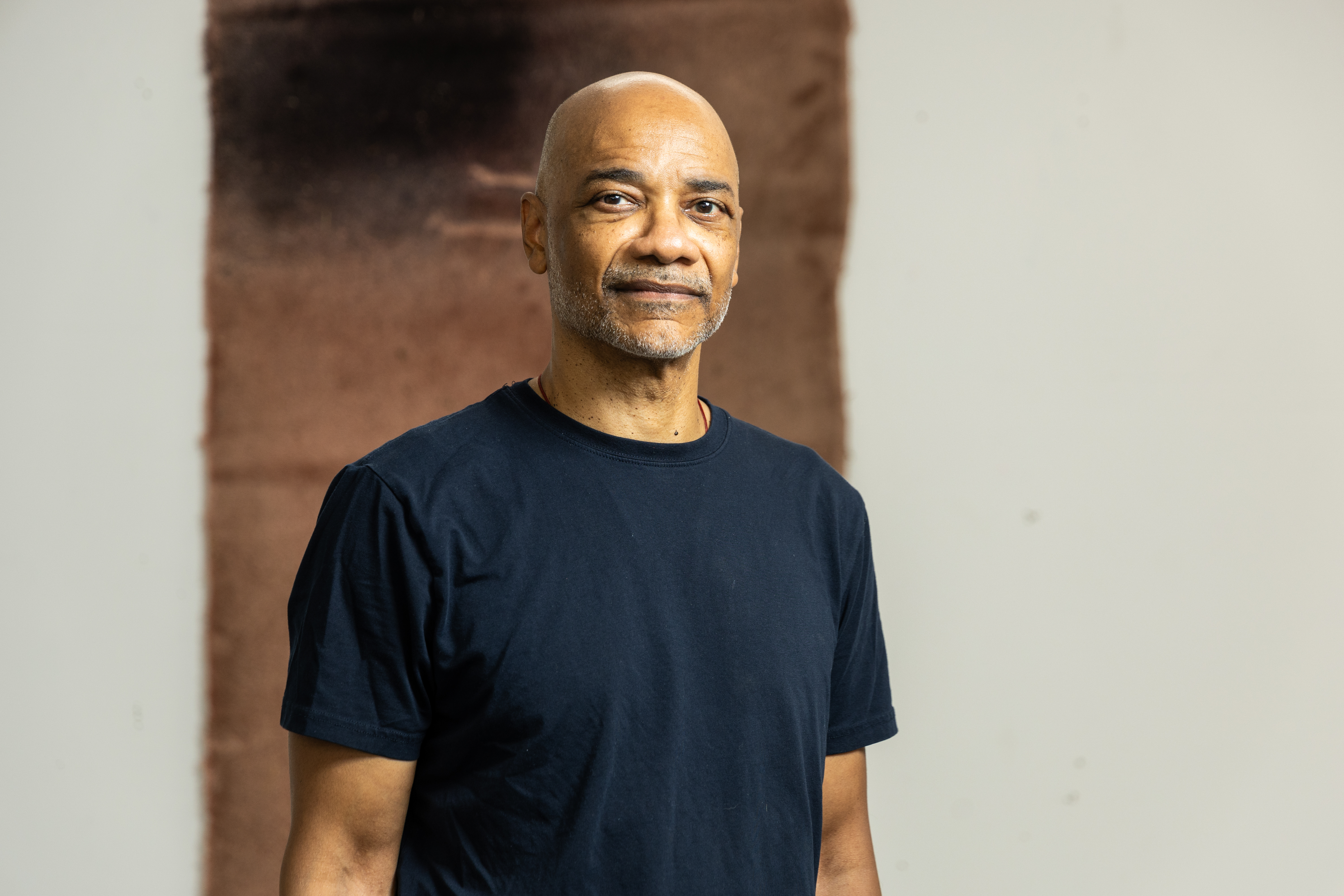
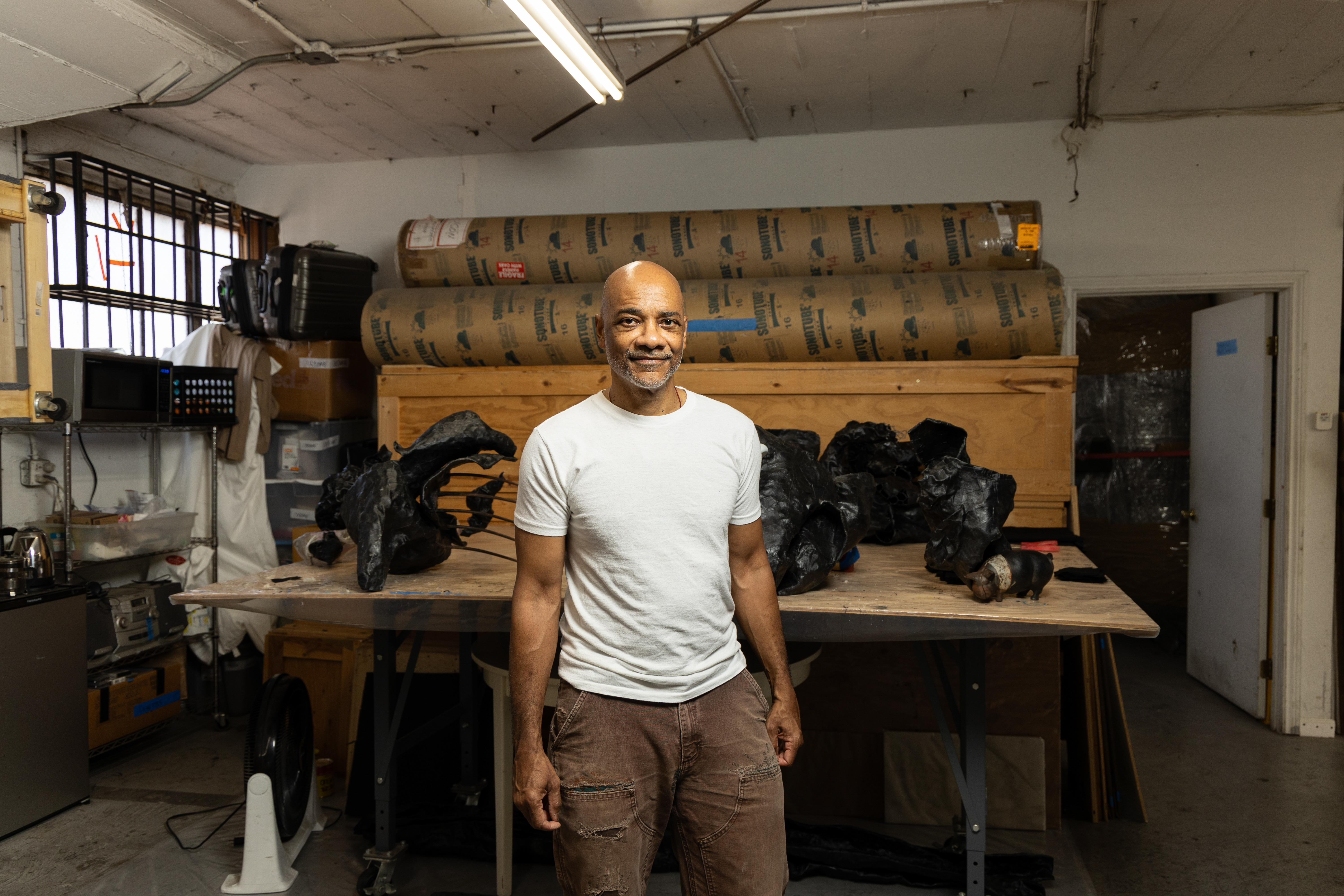
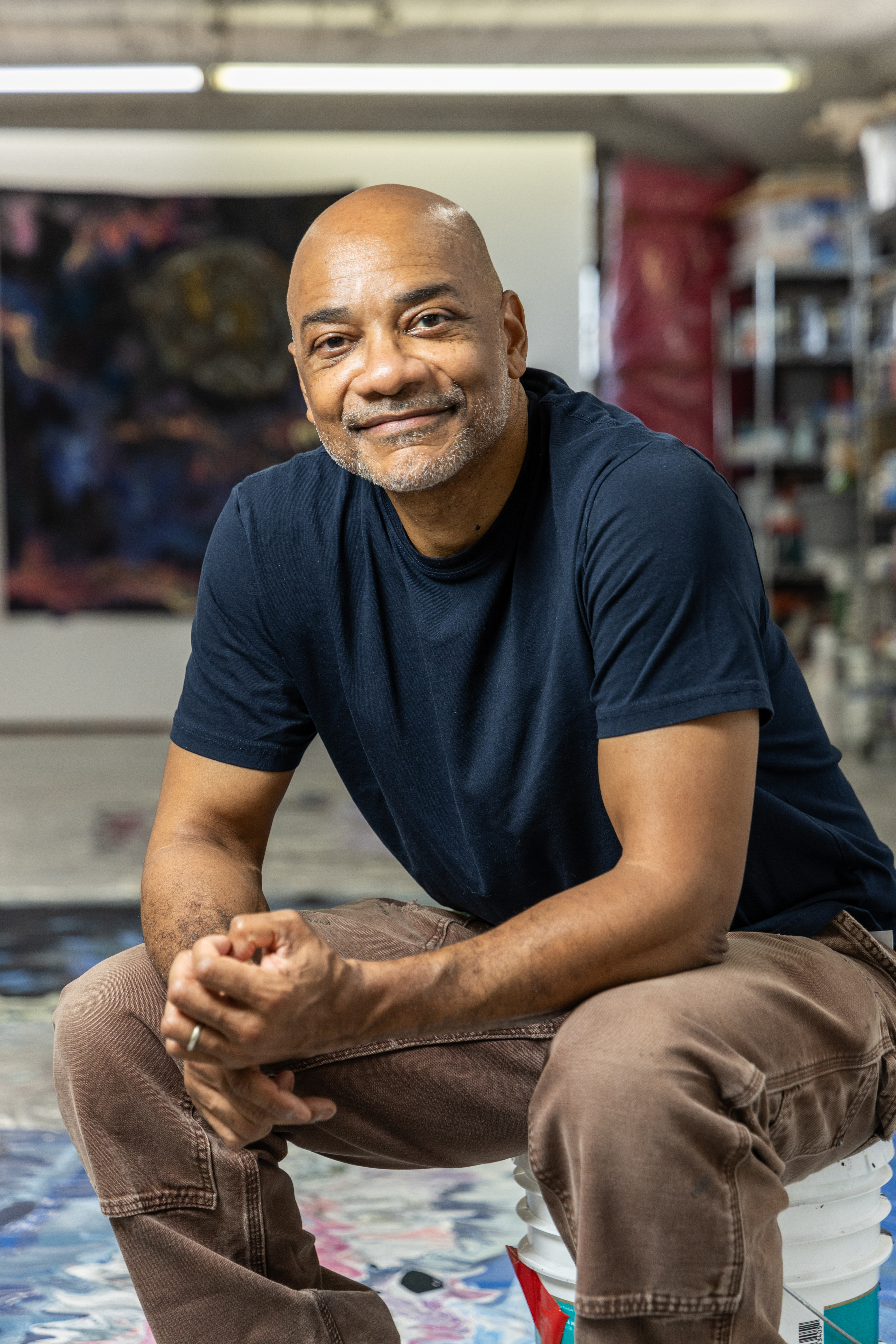
Rodney McMillian is an artist exploring how history and socioeconomic conditions determine experience and belonging in the United States, and particularly in the American South. His practice extends across media—installation, sculpture, painting, video, and performance—and he often incorporates thrifted domestic objects like blankets, sheets, carpets, old mattresses, and broken furniture into his work. His conceptual sculptures and installations gesture toward the social and policy forces that perpetuate economic marginalization.
McMillian’s early work, Chair (2003), consists of a literal, worn out armchair with torn upholstery and broken legs. The work conjures domestic life but, in its degraded state, also alludes to working-class living conditions, the human body, and labor. Themes of labor and respite also find expression in his large-scale installation From Asterisks in Dockery (2012). For this work, McMillian reproduces the interior of a one-room wooden chapel in handsewn red vinyl and red-painted wood. He was inspired by a chapel that once existed on the Dockery Plantation in Mississippi, thought to be the birthplace of Mississippi Delta blues. The installation sets up a series of contradictions—sacred and profane, slavery and salvation—and gives visual and material form to those same animating forces that gave rise to the blues. McMillian’s 2019 work, In This Land, comprises an 88-foot-long abstract landscape painting and sound installation. McMillian adds texture and dimension to the panoramic painting through layers of poured paint and applied inks and paper, evoking the topography of peaks and valleys beneath a vast sky. Spanning all three walls of the gallery for which it was created, the piece surrounds the viewer with sights and sounds, offering a multisensory meditation on notions of home and belonging.
In a recent series of works on paper featuring abstract representations of sunsets in hues of magenta, crimson, and azure, McMillian considers the history and persistent aftereffects of redlining policies in the United States. Made by pouring and pooling paint, ink, and other media onto paper, the works in this series also include quotations from published sources illuminating aspects of the history of discriminatory housing policies. Although many are now illegal, such practices have nonetheless left their mark on American infrastructue, warping it like the twisted skeins of paint that give rise to McMillian’s sunsets. Through a complex practice that deconstructs and restages narratives of power and possibility, McMillian offers new and expansive ways of understanding the social and economic conditions that define our current moment.